
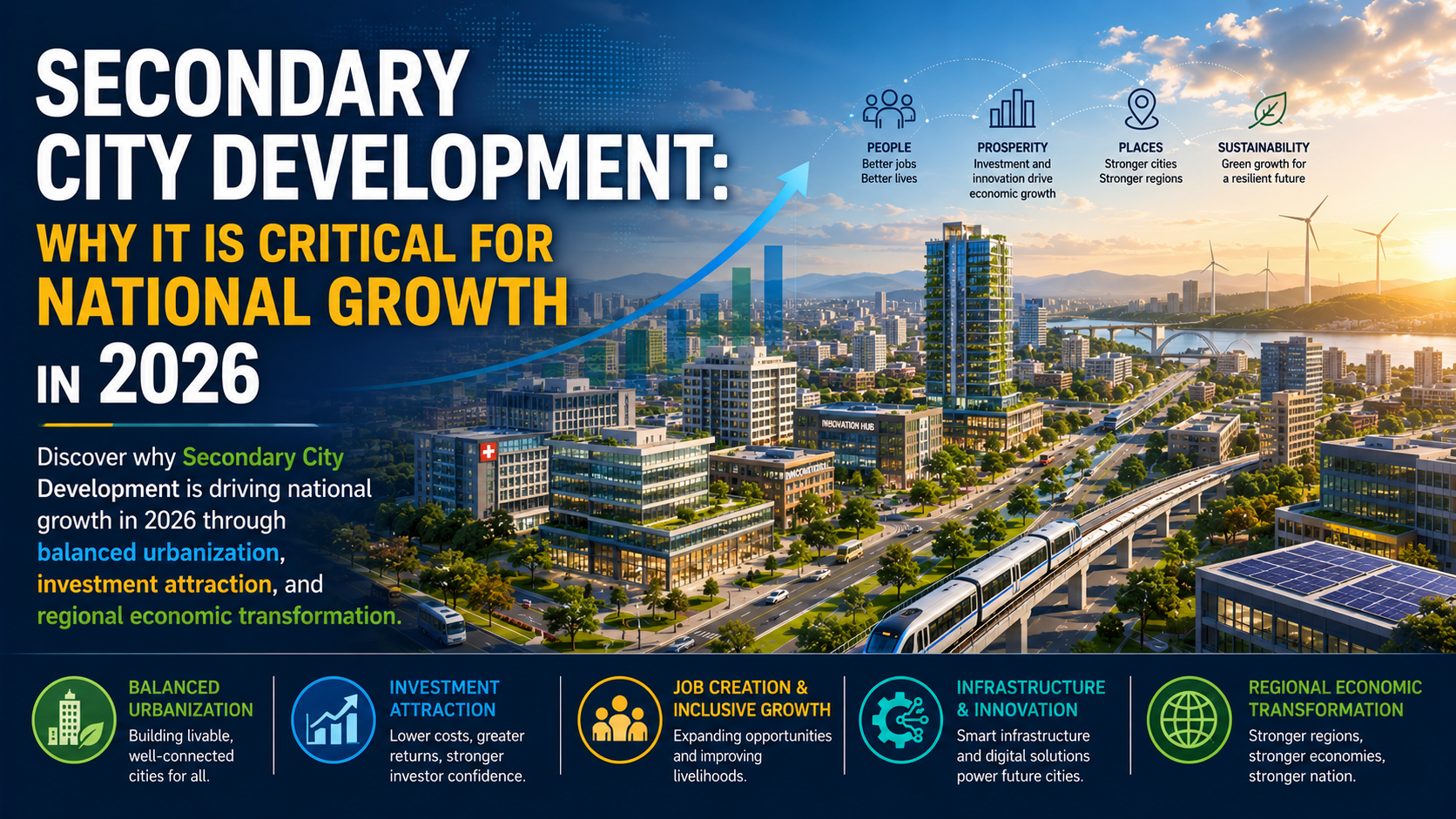

Topics Covered at a Glance
Introduction
For decades, national economic growth has been closely associated with the success of major metropolitan regions. Capital cities and large urban centers have traditionally attracted the majority of investments, talent, infrastructure spending, and economic activity. However, after more than a decade of working on urban economics and regional development projects, I have observed a recurring pattern across both developed and developing economies: excessive concentration in a few large cities eventually creates economic inefficiencies, social inequalities, and infrastructure bottlenecks that undermine long-term growth.
In 2026, governments around the world face mounting challenges associated with rapid urbanization. Housing affordability has become a major concern in many global cities. Traffic congestion continues to reduce productivity. Infrastructure systems are operating under increasing pressure, while regional disparities between prosperous metropolitan areas and lagging regions continue to widen.
These challenges have elevated Secondary City Development from a regional planning concept to a national economic priority. Policymakers increasingly recognize that future prosperity depends not only on strengthening major cities but also on unlocking the economic potential of secondary urban centers. Well-planned secondary cities can create jobs, attract investment, improve territorial balance, and support more resilient economic growth.
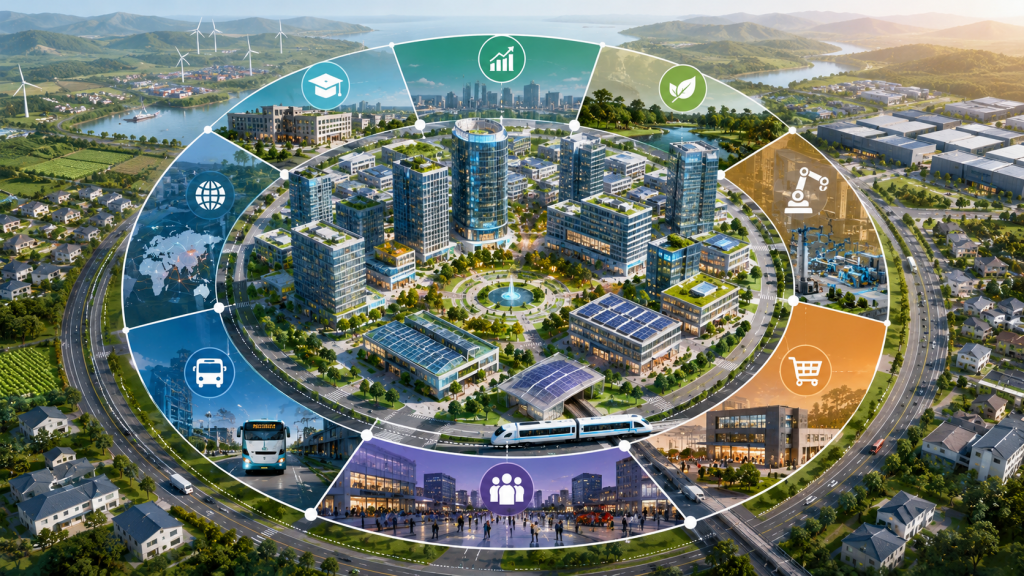
The Rising Importance of Secondary Cities in 2026
What Are Secondary Cities?
Secondary cities are urban centers that operate below the scale of major metropolitan regions but serve as important economic, administrative, industrial, educational, or logistics hubs within a national urban system. Examples include Chengdu in China, Coimbatore in India, Dammam in Saudi Arabia, and Eindhoven in the Netherlands.
These cities often function as connectors between large metropolitan regions and rural hinterlands, creating opportunities for broader economic participation.
Why Are Secondary Cities Gaining Attention?
Several global trends are accelerating the importance of Secondary City Development:
- Rising housing and business costs in major cities.
- Improvements in digital connectivity.
- Growth of remote and hybrid work models.
- Expansion of regional transportation networks.
- Government efforts to reduce regional inequalities.
- Increasing focus on resilient and sustainable urbanization.
National governments increasingly view secondary cities as strategic assets capable of supporting balanced urban growth and regional economic development.
Economic Benefits of Secondary City Development
Job Creation and Economic Diversification
One of the strongest arguments for Secondary City Development is its ability to generate employment opportunities outside traditional metropolitan areas.
Secondary cities can develop specialized economic functions such as:
- Advanced manufacturing
- Logistics and trade
- Tourism and hospitality
- Technology services
- Renewable energy industries
- Knowledge-based sectors
Economic diversification strengthens local labor markets and reduces dependence on a single dominant industry.
Attracting Domestic and Foreign Investment
Investors increasingly seek locations offering lower operating costs and reduced congestion compared to major cities.
In many projects I have reviewed, businesses often prioritize secondary cities because they provide:
- Lower land prices
- Affordable labor markets
- Faster permitting processes
- Better quality of life for employees
- Access to emerging consumer markets
These advantages make secondary cities attractive destinations for domestic and foreign direct investment.
Strengthening Industrial Clusters
Successful secondary cities frequently develop specialized industry clusters as a core outcome of secondary city development. Concentration of firms, suppliers, educational institutions, and supporting services enhances productivity and innovation.
Examples include:
- Manufacturing clusters in western China.
- Automotive and engineering clusters in India.
- Renewable energy hubs in Europe.
- Logistics and industrial zones in Saudi Arabia.
Such clustering contributes significantly to regional economic growth and urban competitiveness.
Reducing Regional Disparities and Promoting Inclusive Growth
Expanding Opportunities Beyond Capital Regions
Many countries face severe spatial imbalances where economic opportunities remain concentrated in one or two metropolitan areas.
Secondary City Development helps distribute economic activity more evenly by creating alternative growth centers. This approach supports:
- Job creation
- Entrepreneurship
- Innovation
- Human capital development
As opportunities expand geographically, migration pressures on major cities also decline.
Improving Access to Essential Services
Secondary cities frequently serve as regional service hubs providing:
- Higher education institutions
- Healthcare facilities
- Financial services
- Government services
Improved access to these services enhances social inclusion and supports balanced territorial development.
Strengthening Social Cohesion
When growth benefits are shared across regions, social and political stability often improve. Balanced regional development reduces perceptions of exclusion and creates stronger national cohesion.
Secondary City Development as an Engine of Future Urbanization
Supporting Sustainable Population Growth
Global urbanization continues to advance, but concentrating future population growth in already congested metropolitan areas is increasingly unsustainable.
Secondary City Development provides an alternative growth model by accommodating population expansion in locations where infrastructure and land resources remain available.
Reducing Pressure on Megacities
Large metropolitan regions often struggle with:
- Traffic congestion
- Housing shortages
- Environmental degradation
- Infrastructure overload
Secondary city development help absorb population and economic growth, reducing pressure on primary urban centers.
Improving Urban Planning Outcomes
Compared with older metropolitan regions, many secondary cities possess greater flexibility to implement:
- Transit-oriented development
- Mixed-use zoning
- Smart infrastructure
- Sustainable land use planning
This creates opportunities for more efficient urban growth patterns.
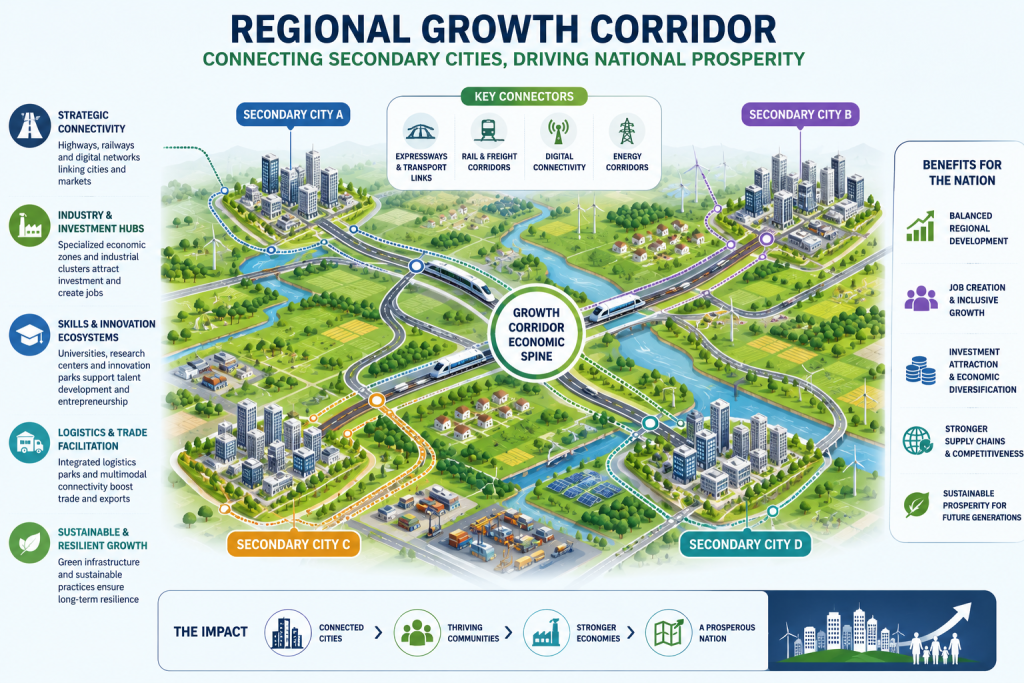
Smart Infrastructure and Digital Transformation
Leveraging Technology for Competitive Advantage
Digital transformation is fundamentally changing the development prospects of secondary cities.
High-speed internet, cloud computing, artificial intelligence, and digital platforms reduce the disadvantages traditionally associated with geographic distance.
Smart Mobility and Urban Services
Secondary cities increasingly deploy:
- Intelligent transportation systems
- Smart traffic management
- Digital government platforms
- Real-time utility monitoring
- Data-driven urban management
These technologies improve efficiency while enhancing service quality.
Building Innovation Ecosystems
Innovation districts, research centers, universities, and startup incubators are becoming important components of Secondary City Development strategies.
Digital infrastructure allows secondary cities to compete effectively in the knowledge economy without replicating the scale of major metropolitan regions.
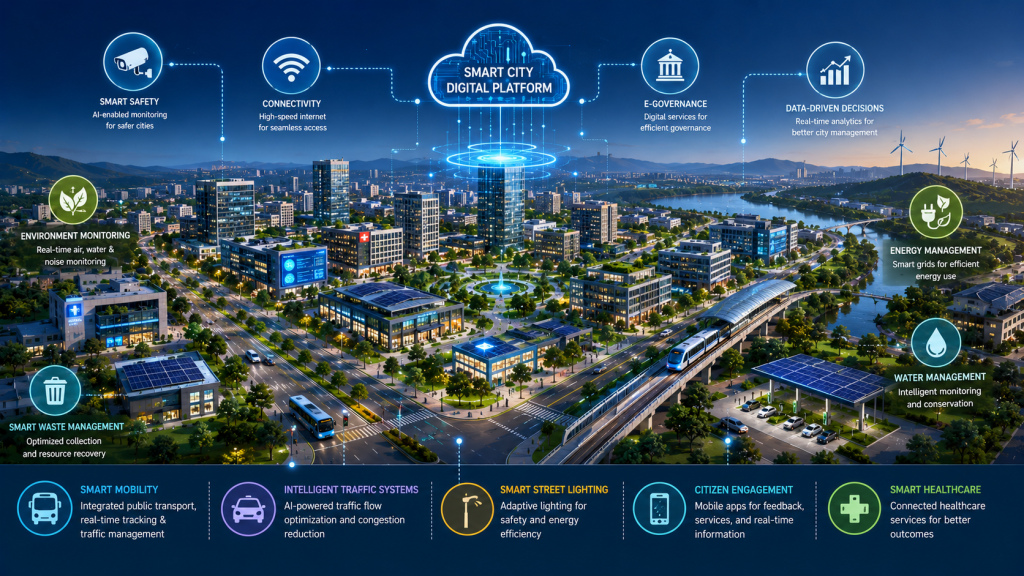
Comparison: Major Metropolitan Cities vs Secondary Cities
| Factor | Major Metropolitan Cities | Secondary Cities |
|---|---|---|
| Cost of Living | High and rapidly increasing | Generally lower and more affordable |
| Business Costs | Expensive land and operating costs | Lower operational expenses |
| Infrastructure Expansion | Often constrained by legacy systems | Greater flexibility for expansion |
| Investment Potential | Mature but highly competitive | Emerging opportunities with strong growth potential |
| Quality of Life | Can be affected by congestion and high costs | Often offers better work-life balance |
| Congestion Levels | High | Moderate to low |
| Economic Diversification | Broad and established | Growing and increasingly specialized |
| Growth Opportunities | Incremental growth | Significant expansion potential |
[IMAGE: Comparison of Megacity and Secondary City Development Models]
Global Examples of Successful Secondary City Development
China
China’s development strategy has increasingly promoted inland and western cities such as Chengdu and Wuhan. Investments in transportation infrastructure, innovation ecosystems, and industrial clusters have transformed these cities into major economic engines.
Saudi Arabia
Saudi Arabia’s Vision 2030 recognizes the importance of diversifying growth beyond Riyadh. Cities such as Dammam, Jazan, Abha, Tabuk, and Yanbu are receiving significant investments in logistics, industry, tourism, and infrastructure.
India
Cities such as Coimbatore, Surat, Indore, and Ahmedabad have emerged as important manufacturing, services, and innovation centers supporting broader regional development.
Indonesia
The development of regional cities beyond Jakarta reflects efforts to reduce congestion while creating more balanced economic opportunities throughout the archipelago.
Vietnam
Da Nang has become an excellent example of how strategic planning, infrastructure investment, and tourism development can accelerate urban economic transformation.
Europe
Cities such as Eindhoven in the Netherlands and Leipzig in Germany demonstrate how secondary urban centers can become globally competitive through innovation-led growth strategies.
Key Lessons
Several common lessons emerge:
- Long-term planning matters.
- Infrastructure investment is essential.
- Strong institutions improve implementation.
- Economic specialization enhances competitiveness.
- Connectivity drives investment attraction.
Challenges Facing Secondary Cities
Despite their potential, several obstacles continue to hinder progress.
Infrastructure Financing
Many secondary cities face limited fiscal resources and struggle to fund major infrastructure projects.
Governance Capacity
Effective urban management requires capable institutions, skilled personnel, and coordinated planning mechanisms.
Talent Retention
Retaining highly skilled workers remains a challenge when larger cities continue to offer greater employment opportunities.
Economic Competitiveness
Some secondary cities struggle to establish clear economic identities or competitive advantages.
Climate Resilience
Future growth must account for climate risks, resource constraints, and environmental sustainability.
Policy Recommendations for 2026 and Beyond
For National Governments
- Integrate Secondary City Development into national growth strategies.
- Expand fiscal support mechanisms.
- Improve intercity transportation connectivity.
- Encourage regional investment incentives.
For Regional Authorities
- Develop place-based economic strategies.
- Strengthen local governance systems.
- Improve land-use planning frameworks.
For Urban Planners
- Prioritize compact and sustainable urban forms.
- Incorporate climate adaptation measures.
- Promote mixed-use development and transit-oriented planning.
For Economic Development Agencies
- Support cluster development initiatives.
- Build innovation ecosystems.
- Facilitate public-private partnerships.
For Private Investors
- Explore emerging markets in secondary cities.
- Invest in logistics, industrial parks, technology districts, and housing.
- Partner with local authorities to support long-term development objectives.
Conclusion
As we move through 2026, it is increasingly evident that national prosperity cannot depend exclusively on a handful of large metropolitan regions. Rising urban costs, infrastructure pressures, and regional inequalities are forcing governments to rethink traditional development models.
Secondary City Development offers a practical and economically sound pathway toward more balanced, inclusive, and resilient growth. By creating new centers of innovation, investment, employment, and urban competitiveness, secondary cities can help countries unlock untapped economic potential while improving quality of life for millions of citizens.
From China and India to Saudi Arabia and Europe, successful examples demonstrate that when supported by strategic planning, infrastructure investment, strong institutions, and digital transformation, secondary cities become powerful engines of national development. For policymakers, planners, investors, and researchers, the message is clear: Secondary City Development is not merely a regional policy agenda—it is one of the defining economic growth strategies of the coming decade.
